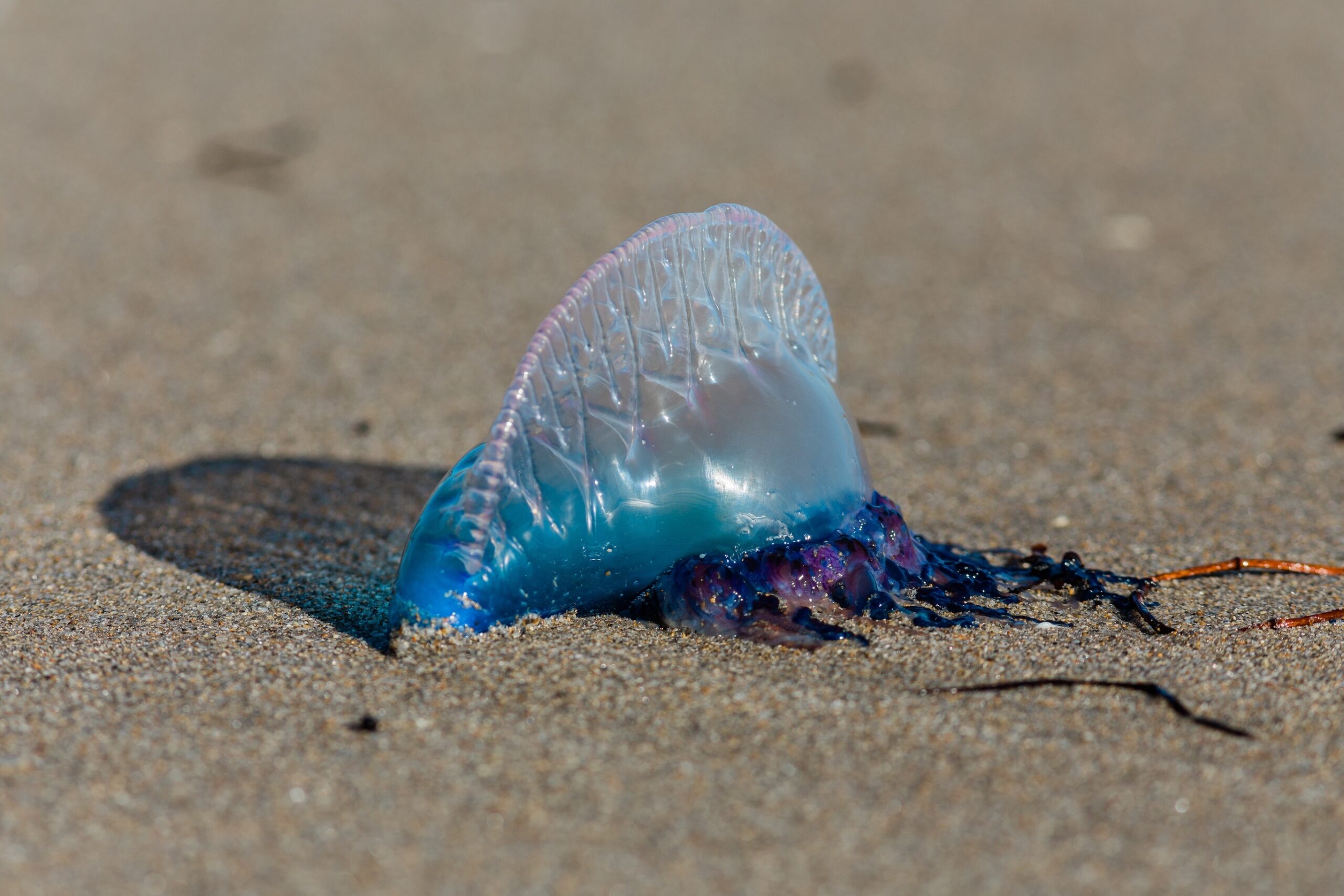
Bluebottle sting first aid involves getting the person out of the water, removing remaining tentacles, rinsing the area with seawater and treating the pain with tolerably hot water. Do not use vinegar on a confirmed bluebottle sting. Most bluebottle stings cause immediate pain and a red, raised line where the tentacle contacted the skin, but more serious reactions can occur and require urgent medical attention. (ANZCOR)
For anyone who spends summer around Sydney’s beaches, that is useful first aid knowledge to have before you need it. Bluebottles can turn an ordinary swim into a painful walk back up the sand, and knowing the difference between recommended treatment and an old beachside remedy can make the response considerably easier.
Key Takeaways
- Do not apply vinegar to a confirmed bluebottle sting. Current Australian guidance specifically advises against it.
- Rinse the sting with seawater, not fresh water, and carefully remove remaining tentacles.
- Use tolerably hot water for pain relief. ANZCOR recommends 43–45°C for up to 30 minutes for a localised bluebottle sting.
- Bluebottle stings can be very painful, although serious systemic effects are uncommon.
- Watch the person after the sting. Severe, persistent or generalised symptoms require medical attention.

Bluebottles Are Part of Summer on Sydney Beaches
Sydney’s coastline is one of the city’s great assets. From the harbour beaches to the long stretches of ocean coastline, warm weather brings swimmers, surfers, families and visitors back to the water.
It can also bring bluebottles.
The bluebottle belongs to the Physalia group and is commonly recognised by its distinctive blue or purple gas-filled float and long tentacle. Although it is commonly called a jellyfish, a bluebottle is actually a colonial organism made up of specialised individual organisms working together.
For the person who has just stepped on one, that biological distinction is unlikely to be their first concern.
The tentacles contain specialised stinging cells that can discharge venom when they contact skin. The result is usually immediate pain accompanied by a characteristic raised or wavy mark.
Bluebottles can also remain capable of stinging after they have washed onto the beach. That is worth remembering when children are exploring the shoreline or somebody is tempted to pick up an interesting-looking blue creature from the sand.
Treat washed-up bluebottles as something to avoid rather than a beach souvenir.
What Happens if You Get Stung by a Bluebottle?
A bluebottle sting typically causes immediate pain at the point of contact.
The tentacle may wrap around an ankle, leg, arm or another part of the body, leaving a painful linear welt. Australian clinical guidance describes immediate burning pain and red welts as characteristic features.
The pain can be surprisingly intense compared with the size of the animal.
Some people experience a relatively small local reaction. Others may have substantial pain, particularly when a long section of tentacle has contacted the skin or several areas have been stung.
The affected skin may become red, raised and irritated. The shape of the mark often follows the path of the tentacle, which is why bluebottle stings can produce distinctive lines across the skin.
More general symptoms are less common but deserve attention. Depending on the severity of the sting and the person’s response, symptoms can extend beyond local pain.
ANZCOR identifies warning signs associated with severe marine envenomation that can include severe pain, sweating, restlessness, nausea and vomiting, collapse, breathing difficulty and, in the most serious circumstances, cardiac arrest. (ANZCOR)
That is why first aid should involve more than treating the painful patch of skin. Keep an eye on the person as well as the sting.

How Painful Are Bluebottle Stings?
There is no single pain rating that applies to every bluebottle sting. Some feel like a sharp, burning whip across the skin. Others can cause intense pain that makes it difficult to concentrate on much else for a period of time.
ANZCOR notes that pain from bluebottle stings is generally immediate and can range from mild irritation to severe pain. The severity can be influenced by how much tentacle contacted the skin, the location of the sting and the individual’s response.
A child who has never been stung before may also become frightened by the sudden pain. Staying calm, reassuring them and beginning appropriate first aid can help keep the situation under control.
Pain should gradually improve with appropriate treatment. Persistent or generalised pain, however, should not simply be dismissed as somebody being particularly sensitive to the sting.

Bluebottle Sting First Aid: What Should You Do?
Current ANZCOR guidance provides specific treatment for a person who has clearly been stung by a bluebottle, has a localised sting, is stable and does not require an ambulance. (ANZCOR)
- First, get the person safely out of the water.
- Encourage them to rest and reassure them. Do not allow them to rub the affected area.
- Carefully remove remaining tentacles and rinse the sting thoroughly with seawater.
- Healthdirect also advises washing the area with seawater rather than fresh water. (Healthdirect)
- Then use mild heat for pain relief.
ANZCOR recommends bathing the area in water between 43°C and 45°C for up to 30 minutes, provided the temperature can be safely tolerated and does not cause a burn. NSW clinical guidance similarly recommends tolerably hot water at around 45°C.
The aim is hot-water treatment, not a second injury.
Do not use boiling or scalding water. Take particular care with children and anyone who may have difficulty accurately judging water temperature.
If hot water is unavailable, or pain is not relieved by heat, ANZCOR advises that a cold pack or ice in a dry plastic bag can be used for pain relief.
If you are at a patrolled Sydney beach, seek assistance from a lifeguard or lifesaver.
Can Vinegar Be Used to Treat a Bluebottle Sting?
This is one of the most important distinctions to understand about jellyfish first aid in Australia.
People sometimes remember hearing that vinegar is used for jellyfish stings and assume that it should therefore be poured over any jellyfish-related sting. That is not the current recommendation.
Australian First Aid Guidance
ANZCOR states specifically: do not apply vinegar to bluebottle stings. Healthdirect gives the same advice and notes that vinegar may increase the pain associated with a bluebottle sting.
Why the Confusion?
Australia has different types of marine stingers, and the first aid is not identical for all of them.
Bluebottle Sting
Vinegar is not recommended. First aid centres on seawater, careful tentacle removal and tolerably hot water.
Other Dangerous Jellyfish
Vinegar may be considered for potentially life-threatening jellyfish envenomation, including box jellyfish and Irukandji-type stings.
It is a good example of why relying on the vague rule "vinegar for jellyfish" is not enough.
Should You Rub a Bluebottle Sting?
The instinctive reaction when something hurts or itches is often to rub it. With a bluebottle sting, resist that urge.
What Does ANZCOR Recommend?
ANZCOR specifically advises against rubbing or allowing the affected person to rub the sting area.
What Should You Do Instead?
Why Knowing the Response Matters
This is another reason it helps to know the correct response before an emergency occurs. A person in pain is not necessarily going to stop and calmly research what they should do next.
First aid training is partly about making useful responses familiar enough that you can draw on them when somebody around you is distressed.
What About Fresh Water?
Australian first aid guidance recommends seawater rather than fresh water for rinsing away bluebottle tentacles.
That can seem strange when there may be a freshwater shower only a few metres from the beach.
The Important Distinction
There is a difference between the initial rinse and the subsequent hot-water treatment for pain relief.
Follow the Correct Sequence
Use seawater to rinse the sting area and help deal with remaining tentacles.
Carefully remove any tentacles that remain on the skin.
After the initial rinse and tentacle removal, tolerably hot water can be used to help relieve pain.

When Does a Bluebottle Sting Need Medical Attention?
Most localised bluebottle stings can be managed with appropriate first aid, but not every sting should be treated as a minor beach inconvenience.
ANZCOR advises seeking ambulance assistance when pain persists or becomes generalised, when the sting covers a large area — around half a limb or more — or when a sensitive area such as the eye is involved.
Pay attention to the person’s overall condition.
If they develop breathing difficulties, collapse, become unresponsive or appear seriously unwell, treat the situation as an emergency and call Triple Zero (000).
If the person is unresponsive and not breathing normally, commence CPR and follow the directions of the emergency call-taker. ANZCOR identifies CPR and rapid access to emergency care as priorities in serious marine envenomation.
An allergic reaction is another reason for concern. NSW emergency-care guidance recognises that marine stings can potentially cause anaphylaxis. (Agency for Clinical Innovation)
Signs such as difficult or noisy breathing, swelling of the tongue or throat, wheezing, persistent dizziness or collapse require urgent action.
Knowing how to recognise and respond to emergencies such as anaphylaxis is one of the practical reasons for completing nationally recognised first aid training rather than relying solely on information picked up online.

How Long Does It Take for a Bluebottle Sting to Heal?
There is no exact healing time that applies to every bluebottle sting.
The most intense pain is generally associated with the period immediately following the sting and should improve with appropriate treatment. Queensland clinical guidance notes that immediate burning pain can last for up to around two hours, although individual experiences vary.
The visible skin reaction can last longer than the acute pain.
Redness, welts or irritation may remain after the worst of the pain has settled, and the appearance of the skin may take time to return completely to normal.
The more useful question is therefore not simply, “How many hours until it disappears?” but, “Is the person’s condition improving as expected?”
Seek medical advice if pain remains severe, does not respond to appropriate pain relief, symptoms are worsening, the affected area is extensive or you are concerned about the reaction. Healthdirect recommends seeing a doctor when pain does not improve with painkillers.
Don't Assume Every Jellyfish Sting Is a Bluebottle Sting
The advice in this article applies when the sting is clearly identified as a bluebottle sting.
Bluebottle First Aid Is Species-Specific
Australia is home to other marine stingers, including species capable of causing life-threatening envenomation. Treatment varies depending on the species and circumstances.
One Rule Does Not Fit Every Jellyfish Sting
ANZCOR notes that a single first aid recommendation cannot be applied to every jellyfish sting in Australia because species differ and potentially dangerous jellyfish require different management.
Not Sure What Caused the Sting?
If you are unsure what caused the sting, seek assistance from a lifeguard or lifesaver where possible and obtain medical advice.
Don't Rely on a Half-Remembered Treatment Rule
Bluebottle first aid should be used when the sting is clearly identified as a bluebottle sting.
Ask a lifeguard or lifesaver for assistance where available and obtain medical advice.
Do not let a vague rule about vinegar, ice or hot water replace proper assessment when the person's condition is concerning.
Why Bluebottle First Aid Is Worth Knowing in Sydney
First aid is often taught through serious scenarios: cardiac arrest, anaphylaxis, severe bleeding, choking and other potentially life-threatening emergencies.
Those skills are essential. But useful first aid knowledge also includes the incidents Australians encounter while living ordinary lives. For Sydney residents, that can mean knowing what to do when somebody is stung while swimming, surfing or walking along the beach.
The value of training becomes particularly clear when an apparently straightforward incident changes. Perhaps the person does not recover as expected. Perhaps their symptoms become generalised. Perhaps they collapse.
At that point, the first aider needs to move beyond treating the sting and recognise the priorities of an emergency response.
Nationally recognised HLTAID011 Provide First Aid training covers responding to a broad range of first aid situations and incorporates CPR competencies. First Aid Pro Sydney currently offers HLTAID011 training through both face-to-face and blended delivery options. (First Aid Course Sydney)
Explore First Aid Pro Sydney courses
The goal is not to turn every trip to the beach into an emergency drill. It is simply to make sure that when something does happen, you have more to rely on than somebody nearby saying, “I think you’re supposed to put vinegar on it.”

Be Ready Before Your Next Day at the Beach
A bluebottle sting can be intensely painful, but the first aid response is relatively straightforward when you know what to do.
Remember the essentials: get out of the water, don’t rub the sting, remove remaining tentacles, rinse with seawater, don’t use vinegar and use tolerably hot water for pain relief.
Just as importantly, watch the person. First aid is never only about following a treatment recipe. It is about recognising when an ordinary incident is becoming something more serious and knowing when to escalate the response.
Sydney’s beaches should be enjoyed, not feared. A little preparation simply means you are better equipped when the unexpected happens.
If you would like to build practical skills for managing bites and stings, CPR, anaphylaxis, bleeding and other common emergencies, consider completing a nationally recognised HLTAID011 Provide First Aid course with First Aid Pro Sydney.
Related Reading
- Emergency Care Institute (NSW Govt.) – Insect bites or marine stings
- Healthdirect – Sea creature bites and stings
- ANZCOR Guidelines – Guideline 9.4.5 – First Aid Management of Marine Envenomation
First Aid Pro – Free First Aid Resources – Jellyfish Stings
FAQs
Can vinegar be used to treat stings from bluebottle jellyfish?
No. Do not use vinegar on a confirmed bluebottle sting. ANZCOR and Healthdirect advise against it. Rinse with seawater, remove remaining tentacles and use tolerably hot water for pain relief.
How long does it take for a bluebottle sting to heal?
The acute pain usually improves sooner than the visible skin reaction. Clinical guidance notes that burning pain can last for up to around two hours, although this varies. Redness and welts may persist longer. Seek medical advice if significant pain persists or symptoms worsen.
What happens if you get stung by a bluebottle jellyfish?
A bluebottle sting usually causes immediate pain with a red, raised or linear welt where the tentacle contacted the skin. More widespread symptoms are uncommon but can occur, so monitor the person’s overall condition after the sting.
How bad do bluebottle stings hurt?
Pain varies considerably. A sting may cause anything from irritation to severe immediate pain. The amount of tentacle contact, sting location and individual response can influence how painful it feels.
What is the best first aid for a bluebottle sting?
For a clearly identified, localised bluebottle sting in a person who is otherwise stable, get them out of the water, keep them at rest, do not rub the sting, remove remaining tentacles, rinse thoroughly with seawater and immerse the affected area in tolerably hot water. ANZCOR recommends approximately 43–45°C for up to 30 minutes while taking care to prevent burns.